
7 Things You Should Always Check Before Buying Used Wooden Pallets (Most Buyers Skip #4)
Sourcing pallets for warehouse or distribution operations is rarely treated with the same scrutiny as other procurement decisions. Pallets are often seen as a commodity — interchangeable, low-cost, and easy to replace. But for operations that rely on consistent stacking, racking systems, forklift compatibility, or load-bearing regularity, the quality of each pallet matters more than most buyers acknowledge until something goes wrong.
The secondary pallet market is large and varied. Pallets come from different industries, carry different histories, and have been maintained — or neglected — in entirely different ways. Buying without a structured evaluation process means accepting unknown variables into your supply chain. What looks serviceable on delivery may fail under load, create safety issues in racking, or generate unexpected disposal costs when the pallet breaks down faster than expected.
This article outlines seven specific things worth examining before committing to a purchase. These apply whether you’re buying a small lot or establishing an ongoing supply arrangement.
1. Understand What Grade Classification Actually Tells You
When suppliers describe used wooden pallets using grade classifications like “A,” “B,” or “#1 recycled,” those labels do not represent a universal standard. There is no single regulatory body that enforces pallet grading across the industry. What one supplier calls Grade A may reflect very different criteria than another supplier’s Grade A designation. The grade is a shorthand for condition — not a certification.
Understanding this distinction helps buyers ask better questions. Instead of accepting a grade label as sufficient, ask what the grading criteria actually include: whether deck boards are checked for cracks, whether stringers must be intact, whether previous repairs are permitted and up to what extent. The answer reveals how much attention the supplier actually pays to quality before categorizing and selling stock.
Why Grade Labels Can Mislead Buyers Without Context
Pallet grading is a supplier-defined process. Two suppliers serving the same regional market may apply entirely different thresholds for what qualifies as “ready for reuse.” One may accept minor board splits as acceptable for Grade B; another may reject any board with visible cracking. Without asking for a written description of grading criteria, you are buying on assumption rather than specification.
This matters most when you’re operating racking systems with defined load tolerances or when your pallets need to meet the requirements of a downstream customer or third-party logistics facility. Establishing clarity on grading criteria upfront reduces the risk of receiving stock that creates operational problems during use.
2. Inspect the Stringers Before Anything Else
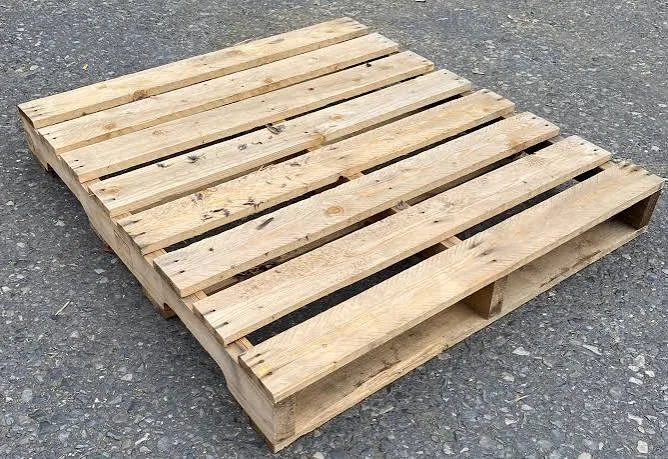
The stringers are the main structural beams that run the length of a wooden pallet. They carry the load transferred from the deck boards and distribute weight to the floor or racking surface. A pallet with compromised stringers may appear intact when unloaded but will flex, crack, or fail entirely when weight is applied — particularly during forklift entry or when stored vertically in racking.
What to Look for in Stringer Condition
Cracks along the grain of a stringer that run horizontally are a structural concern. These are different from surface checking, which is a normal result of wood drying and typically cosmetic. A stringer that has been previously repaired with a companion board — a short board nailed alongside a cracked stringer — can still perform well, but only if the repair is solid and centered over the damaged area. Poorly attached companion boards or those that cover extensive damage without fully restoring integrity are a warning sign, not a reassurance.
Pay attention to the notch areas of stringers as well. These cut-out sections allow forklift tines to enter from the side, and they represent a natural weak point in the wood. Checking that notch areas are clean, not split further, and free from damage is a basic step that’s frequently skipped during bulk purchasing decisions.
3. Evaluate Deck Board Condition and Spacing Consistency
Deck boards are the boards that make up the top and bottom surfaces of the pallet. Their condition affects how loads are supported and whether products placed on them remain stable during transport or storage. Missing boards, boards nailed down at angles, or boards with significant warping all create uneven load distribution.
How Deck Board Gaps Affect Load Stability
A consistent gap between deck boards allows for airflow and drainage, which is intentional in pallet design. However, irregular gaps — particularly those caused by missing boards or boards pulled away from fasteners — create instability for loads that include smaller packages or products without rigid base packaging. If product packaging contacts a gap in a way that allows it to shift or sink during transport, the resulting movement can cause damage or create imbalance in stacked loads.
Boards that are held by only one nail at either end, or boards showing split ends where the fastener no longer holds, should be counted as functional missing boards rather than present ones. Inspecting fastener condition alongside board surface condition gives a more accurate picture of deck integrity.
4. Ask Where the Pallets Were Originally Used
This is the check most buyers skip, and it carries real operational risk. The original application of a pallet affects what it may have been exposed to during its working life. Pallets used in food manufacturing environments may have absorbed moisture, liquids, or food-grade oils. Pallets from chemical or industrial environments may carry residues that are not visible but remain present on the wood surface.
Why Industry of Origin Changes the Risk Profile
Wood is porous. Spills, chemical exposure, and long-term environmental conditions in the original facility all leave traces that do not fully leave the pallet through drying or surface cleaning. For operations handling food products, pharmaceuticals, or products with strict contamination requirements, introducing pallets with unknown industrial histories creates a compliance exposure that’s difficult to correct after the fact.
Even outside of regulated industries, pallets from environments with high humidity, pest pressure, or chemical use can introduce problems into a clean warehouse. Asking about industry of origin before purchasing is not excessive caution — it’s a basic procurement question that suppliers with responsible sourcing practices should be able to answer clearly.
5. Confirm Whether the Pallets Carry Any Heat Treatment Markings
International shipments and certain regulated supply chains require that wooden pallets be heat treated in accordance with ISPM 15, the international phytosanitary standard designed to prevent the spread of invasive pests through wood packaging. Heat-treated pallets are marked with an approved symbol that includes the country code, producer code, and treatment method designation.
When Heat Treatment Status Matters in Practice
If your operation ships internationally or supplies to customers who do, pallets without valid heat treatment markings can cause delays, rejection of shipments, or additional cost at the border. Even for domestic operations, some large retailers and distribution networks require ISPM-compliant pallets as a condition of entry to their facilities. Checking whether used pallets retain a readable and valid HT stamp before purchasing prevents complications that arise only when the pallets are already in use and needed for a specific shipment.
6. Assess Moisture Content and Signs of Long-Term Storage
Pallets stored outdoors, in unheated buildings, or in high-humidity environments absorb moisture into the wood over time. Elevated moisture content affects the weight of the pallet, its structural performance under load, and its tendency to warp or cup during subsequent drying.
How Storage Conditions Show Up in the Wood
Visible signs of prolonged outdoor exposure include surface discoloration, black staining from mold or mildew, and pronounced warping of deck boards or stringers. These are not always indicators of structural failure, but they are indicators of a pallet that has been through more environmental stress than one stored dry. Warping, in particular, affects whether the pallet will sit flat under a load and whether it will feed consistently through automated handling systems.
Buying pallets that have been stored under cover and off the ground — or that have been dried and conditioned before resale — reduces the likelihood of encountering warping, mold, or weight inconsistency in your incoming stock.
7. Review Supplier Sorting and Quality Control Practices
The reliability of used pallets you receive over time depends less on any single inspection and more on the consistency of the supplier’s internal process. A supplier who sorts pallets systematically, applies consistent grading criteria, and separates unusable units before packaging will produce more predictable results than one who grades loosely and fills orders from unsorted stock.
What a Well-Run Supplier Process Looks Like
Suppliers with structured operations typically offer traceability on the lots they sell, maintain separated stock by grade and specification, and can describe their repair process for pallets that have been reconditioned before resale. They should be able to confirm whether repaired pallets have been reinforced to a defined standard or whether repair quality varies by the individual doing the work.
Asking for a sample lot before placing a larger order is a reasonable request that established suppliers readily accommodate. A supplier who resists this is worth treating cautiously. The willingness to allow evaluation before commitment is one of the clearest indicators of a supplier who stands behind the consistency of what they’re selling.
Making a More Informed Purchase Decision
Buying used wooden pallets is a practical, cost-effective choice for many operations. The secondary pallet market offers real value, and well-maintained recycled pallets perform reliably across a wide range of applications. The difference between a good purchase and a problematic one usually comes down to the questions asked and the steps taken before the order is placed.
None of the checks outlined here require specialized equipment or extended evaluation time. Most of them come down to asking clear questions about origin, grade criteria, treatment status, and supplier process — and then verifying what you’re told against what you see in the sample. Operations that build this habit into their procurement process tend to experience fewer disruptions, fewer mid-cycle replacements, and better consistency in how their pallets perform under real working conditions.
The secondary market rewards buyers who know what to look for. Going in with a clear checklist turns a routine purchase into a more deliberate and better-protected decision.