
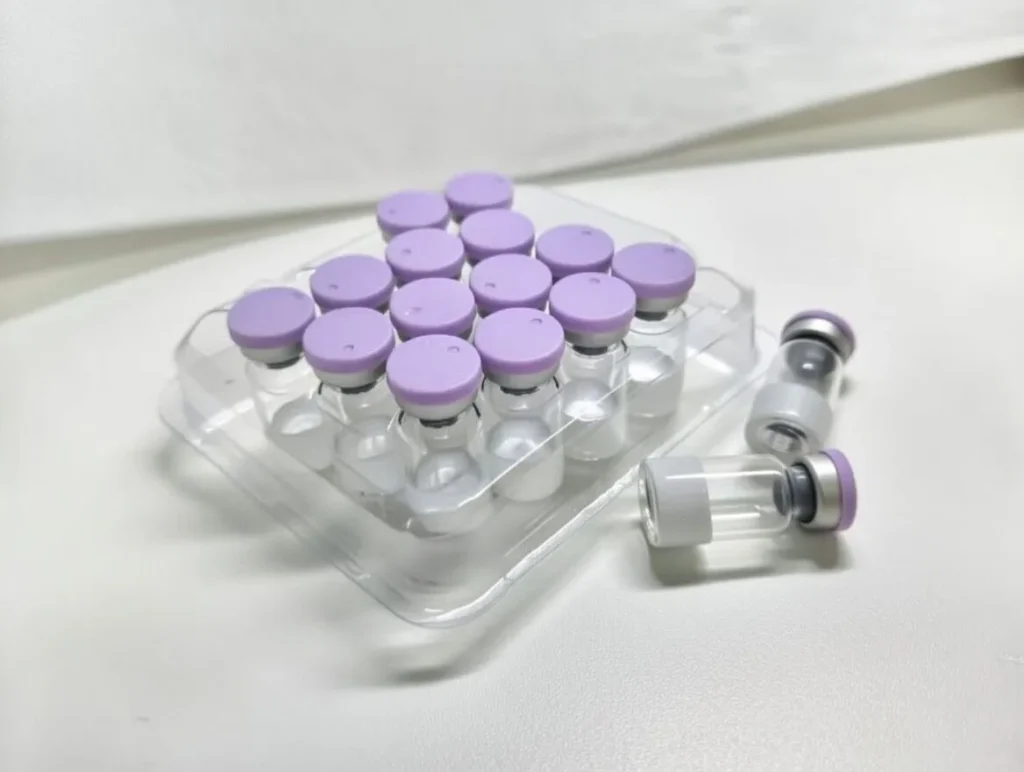
The Peptide Purity Standard Most Research Buyers Ignore
If you ask most people buying lab research peptides what they consider the most important factor, the answer will be “purity.” That’s alright, but if you ask a follow-up question like who verified that purity, this would be a different story. And here’s the main problem: most people take the purity figure stated on the label and nothing more. The difference between a reliable provider and the one who is not lies in the convictions outlined in the sentence above.
Everyone Checks the Number, Almost Nobody Checks the Source
Walk through any research peptide site, and you’ll see the same claim everywhere: 98% purity, 99% purity, sometimes higher. It looks reassuring. But research grade peptides aren’t automatically trustworthy just because a big number sits next to them. That number came from somewhere, and where it came from matters just as much as what it says.
Here’s the part that gets skipped constantly. A lot of those certificates are generated by the supplier’s own in-house lab. That’s the equivalent of a student grading their own exam. It’s not necessarily dishonest, but it’s not independent either, and independence is exactly what a certificate is supposed to provide.
What Real Peptide Purity Testing Actually Involves
Solid peptide purity verification rests on two separate tests, not one. The first technique is referred to as high-performance liquid chromatography or HPLC. The process separates all components of the sample depending on their chemical properties and displays the output in the form of a graph with peaks. The sample in consideration should have one main definite peak and different smaller peaks around it, which represent impurities, such as incomplete sequences and residual synthesis byproducts. The value of the main peak in relation to the other peaks allows one to learn about the purity level of the sample.
The other method is mass spectrometry, or MS. This method serves a purpose that HPLC does not. While HPLC shows the level of purity of the sample, it cannot specify which kind of compound corresponds to this level. In other words, while the result of HPLC may show that the sample is 99% pure, this doesn’t tell whether it is the right compound. MS is meant to measure molecular weight and check it against the molecular weight that is expected for the sample in consideration.
The Standard Buyers Keep Missing: Independent Verification
Here lies the crux of the situation. A supplier is capable of running both tests in their laboratory while still delivering a legitimate document. The document might contain the percentage or the chromatogram and even a mass spectrometer reading, but it would lack any external validation of the results.
However, third-party testing solves this problem. An independent laboratory has no financial interests in the outcome and performs HPLC and mass analysis of the same batches and provides results that can be verified separately from the vendor’s results. Some laboratories even enable you to check the batch number and pull out the report directly from their database, not from the supplier’s website. This is practically impossible to fabricate.
This is a factor that is hardly considered when making casual purchases, but it is the difference between mere claims and having actual evidence.
Why the Gap Between These Two Actually Matters
This is far more than an issue of paperwork. A 2020 impartial analysis revealed that around 25% to 33% of products sourced from suppliers without verification do not satisfy purity claims, thus constituting a serious error and a significant proportion of the market selling things that do not don’t comply with labeling.
Impurities are not only a minor issue in the context of research. Trace amounts of impurities may impact the results in dose-response experiments, since even a small amount of unknown substance may influence the outcome.
The Bottom Line
While purity percentages receive the most attention, it is only a part of the story. Research purchasers are protected by the method of verification, which means that proof of the purity being confirmed by an independent source other than the seller is needed. If verification is bypassed, even the claim that a product is 99% pure will simply be a figure that the company decides to present as its own.