
What Is the Safest Way for Dogs to Travel in a Car?
A car ride can feel harmless, right up to the moment you brake hard. In a sudden stop, a loose dog can slam into seats, glass, or people. Just as worrying, they can distract you at the worst time.
In the UK, Highway Code Rule 57 says dogs must be suitably restrained. In plain terms, they shouldn’t roam, interfere with driving, or become injured if you stop quickly. Using a properly fitted dog car seat is one of the simplest ways to keep your dog safe and your drive stress-free. Below is what “safe” looks like in real life, how to choose the right set-up, and the basics that make trips calmer.
Key Takeaways
- Dogs should always be restrained in a car.
According to UK Highway Code Rule 57, dogs must be suitably restrained so they do not distract the driver or risk injury during sudden braking. - Loose dogs can cause serious safety risks.
An unrestrained dog can become a dangerous projectile in a crash or distract the driver at critical moments. - Crash-tested crates or carriers provide the highest level of safety.
Properly secured crates limit movement during collisions and help reduce distractions while driving. - The back seat or boot area is safer than the front seat.
Airbags in the front seat can seriously injure dogs if they deploy during a collision. - Crash-tested harnesses are a good alternative.
A well-fitted dog seat belt harness attached to the seat belt system can help keep dogs secure on the rear seat. - Dog guards alone do not fully protect dogs.
While guards stop dogs from entering the passenger area, they should ideally be paired with a tether or crate for better protection. - Proper installation is essential for safety.
The safest travel setup is the one that is correctly fitted and securely anchored every time you drive. - Avoid letting dogs stick their heads out of the window.
Flying debris and sudden turns can lead to eye injuries or falls from the vehicle. - Regular travel breaks help dogs stay comfortable.
Stopping every two hours allows dogs to drink water, stretch, and use the toilet during longer journeys. - Preparation makes car journeys safer and calmer.
Bringing essentials such as water, a leash, waste bags, and keeping the cabin free from loose items improves safety for both dogs and drivers.
What “safely restrained” means in the UK, and why it matters
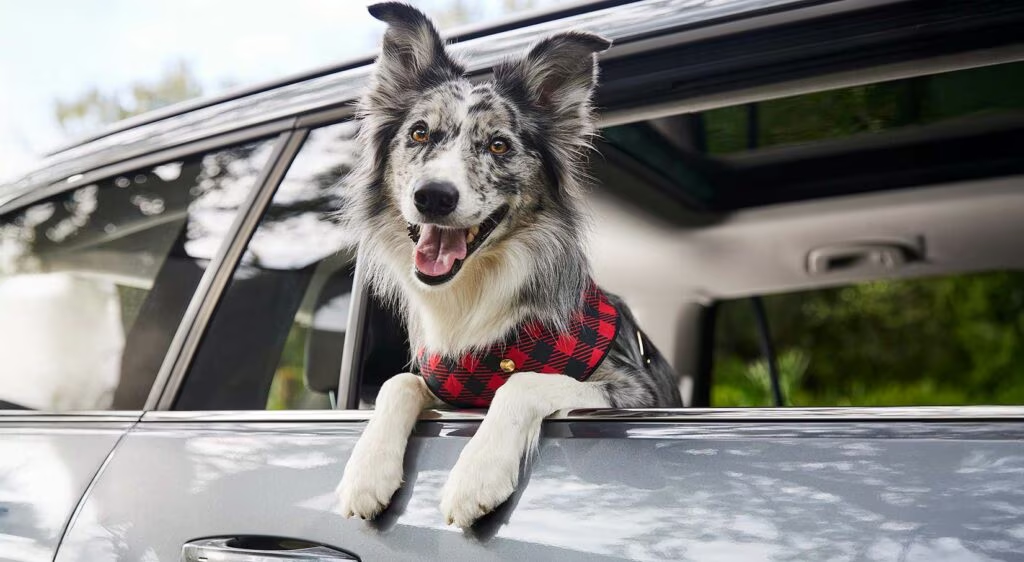
Rule 57 is simple: your dog needs a restraint that stops distraction and lowers injury risk during sharp braking. That means no wandering between seats, no sitting on a lap, and no scrambling under pedals. Even a calm dog can lurch forward when you swerve. Letting a dog hang their head out of the window is risky too. Debris can injure eyes, and a sudden turn can lead to a fall. The front passenger seat is also a poor choice for most dogs because airbags can deploy with huge force.
If an unrestrained dog contributes to a near miss or crash, police can treat it as poor control of the vehicle. For more practical background on restraint choices, see essential dog car restraints and harnesses.
Which option is safest: crash-tested crate, dog guard, or seat belt harness?
There isn’t one perfect solution for every car and dog. Still, some options protect better than others, especially when they’re secured to the vehicle properly. The safest set-up is the one that’s properly fitted and anchored, every single trip.
Crash-tested crate or carrier: the top pick for most dogs
A crash-tested crate or solid carrier offers the most containment. It helps in two ways: it limits movement in a collision and it reduces driver distraction. Larger dogs often travel best in the boot of an estate or SUV, with the crate strapped so it can’t slide. Smaller dogs can ride in a secured carrier on the back seat. Build acceptance with short sessions first. A few five-minute practice rides can make the crate feel normal.
Dog guard in the boot or a crash-tested harness on the back seat: good, but set-up matters
A dog guard makes sense when your dog travels in the boot area. However, a guard alone mainly stops them entering the cabin. It doesn’t fully control their body in a crash, so pair it with a boot tether or, better, a secured crate.
A crash-tested harness works well on the back seat when it fits snugly and clips correctly into the seat belt system. Keep the tether short so your dog can sit and lie down, but can’t climb forward. Booster seats can help small dogs feel steady, but only when used with a proper harness.
A quick safety checklist for calmer, cleaner, safer journeys
Do a fit check before every drive. Straps should lie flat, and buckles should lock cleanly. Keep dogs out of the front seat, even on quick errands. Plan stops about every 2 hours for water and toilet breaks. If your dog gets travel sick, skip big meals right before you leave, and keep the cabin cool. Never leave a dog in a parked car, temperatures can rise fast even on mild days.
Pack a lead, poo bags, towel, and water. Also check ID, tags, and microchip details are up to date. Finally, keep the cabin quiet and free of loose items that can fly forward. For the exact wording behind the rule, read Highway Code Rule 57.
Conclusion
The safest way for dogs to travel in a car is a crash-tested crate or carrier that’s secured so it can’t move. If that won’t work, use a well-fitted crash-tested harness on the rear seat, or a boot guard set-up paired with proper restraint. Try your system on short trips first, then re-check fit as your dog grows or changes weight.
FAQs
What is the safest way for dogs to travel in a car?
The safest way for dogs to travel in a car is in a crash-tested crate or carrier that is securely anchored to the vehicle. This setup limits movement and helps protect the dog during sudden stops or accidents.
Is it illegal to drive with an unrestrained dog in the UK?
While not specifically illegal, UK Highway Code Rule 57 requires dogs to be suitably restrained. If an unrestrained dog causes distraction or contributes to unsafe driving, it could lead to penalties.
Can dogs sit in the front seat of a car?
It is not recommended. Airbags in the front seat deploy with significant force and can seriously injure a dog during a collision.
Are dog seat belt harnesses safe?
Yes, crash-tested dog harnesses designed for car travel can be safe when fitted correctly and attached properly to the seat belt system.
Are dog guards enough to keep dogs safe in a car?
Dog guards mainly prevent dogs from entering the passenger area. For better safety, they should be combined with a tether or secured crate.
Why should dogs not stick their heads out of car windows?
Debris, dust, and insects can injure a dog’s eyes, and sudden turns or stops can cause the dog to lose balance or fall.
How often should you stop during long car journeys with a dog?
It is best to stop approximately every two hours so dogs can drink water, stretch, and take a toilet break.
What should you pack when travelling with a dog in the car?
Essential items include water, a lead, waste bags, a towel, and updated identification tags or microchip information.
Can small dogs travel safely in booster seats?
Yes, booster seats can help small dogs feel secure, but they should always be used together with a proper harness for safety.
How can you help a dog get used to travelling in a crate?
Start with short practice rides lasting a few minutes. Gradually increase travel time so the dog becomes comfortable with the crate.
Why is proper installation of dog restraints important?
Even the best safety equipment will not work effectively if it is not fitted correctly or securely attached to the vehicle.
Can dogs get travel sickness in cars?
Yes, some dogs experience motion sickness. Avoid feeding large meals before travel and keep the car well ventilated to reduce discomfort.
Why should dogs never be left alone in parked cars?
Temperatures inside parked cars can rise quickly, even in mild weather, creating dangerous conditions for dogs.
Where should large dogs travel in a car?
Large dogs typically travel safest in the boot area of an estate car or SUV inside a properly secured crate.
Do dogs need identification when travelling?
Yes, dogs should have updated ID tags and microchip details in case they become separated during travel.