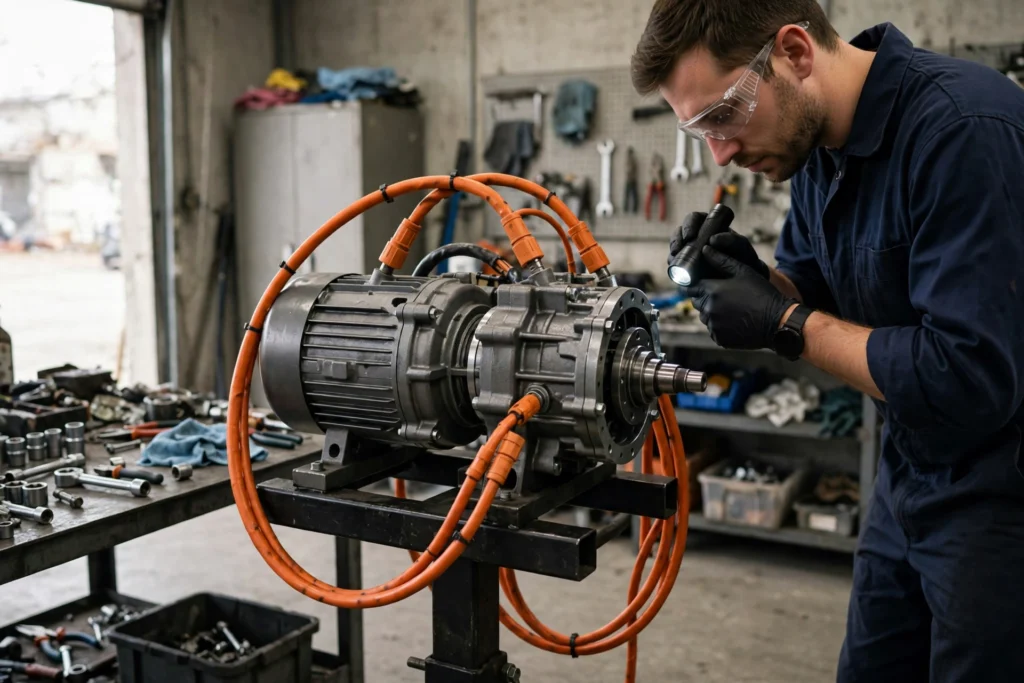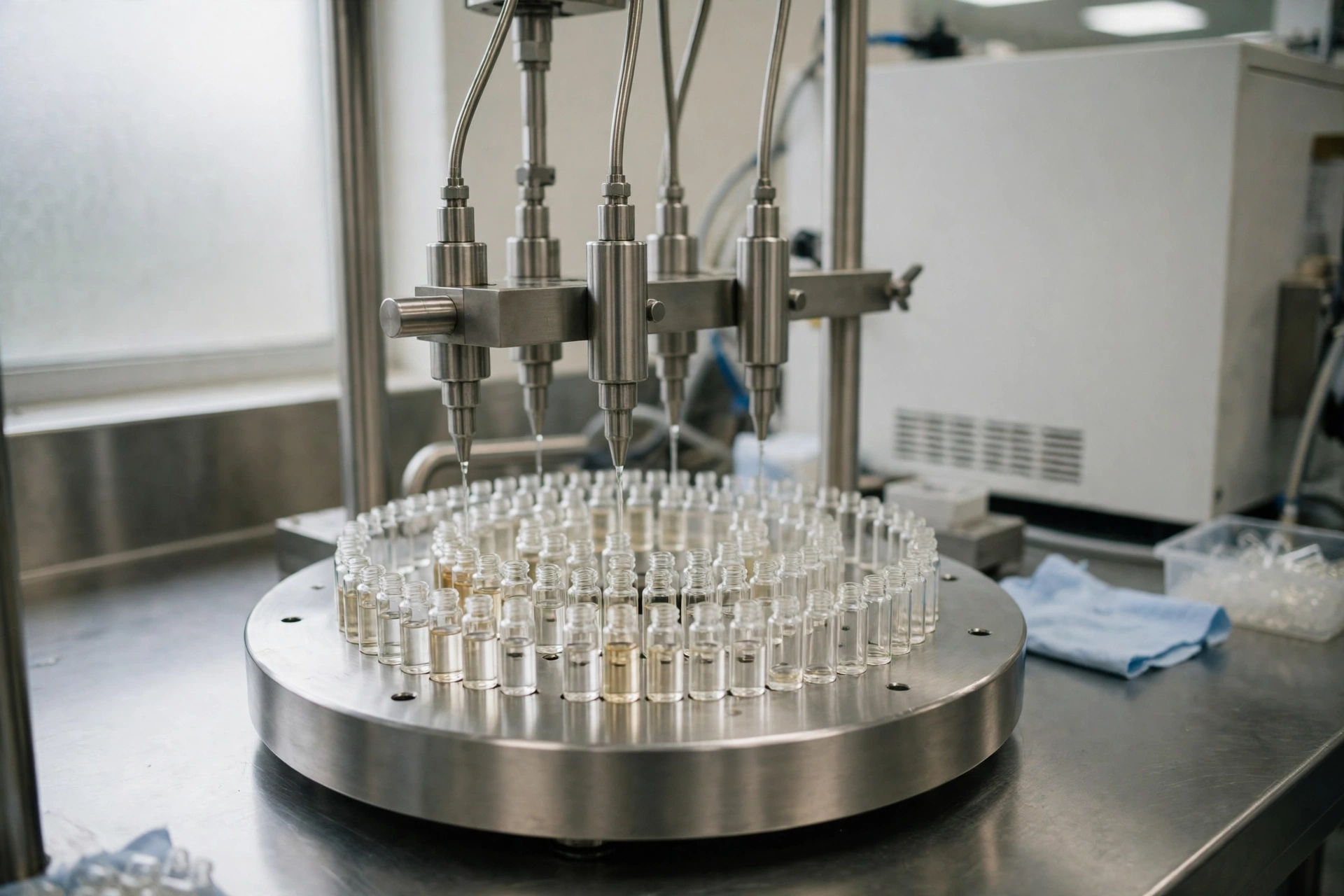
Sample vial lines fail in small ways. A cap sits a fraction off square. A drop clings to a nozzle. A vial wobbles in its pocket. None of it looks dramatic until a box of discovery sets arrives smelling of everything at once. This guide works from symptom to cause. Change one variable at a time, and write down what you changed.
Start with the components
Before touching the machine, measure the vials and caps. "2 ml vial" describes capacity, not geometry. Silgan Dispensing's fragrance catalogues, for example, list 1.5 ml and 2 ml sampler glass vials with a diameter of 11.25 mm, while its 5 ml mini glass bottle measures 14.25 mm. Other suppliers and designs can differ, and parts cut for one diameter will not guide another properly. Record outer diameter, height, neck dimensions and cap fit for several pieces from each delivery. A new lot or supplier can introduce variation that looks like a machine fault.
Symptom table
| Symptom | Likely causes | First checks |
|---|---|---|
| Short fills | Air in the tube, empty supply, worn tubing | Prime again, inspect tube, check-weigh |
| Fill volume drifting | Tube wear, temperature change, loose fitting | Recalibrate, compare with run records |
| Drips after dosing | Suck-back setting, nozzle damage, air bubbles | Adjust suck-back in small steps |
| Splashing or wet necks | Pump speed too high, nozzle off centre | Reduce speed, realign nozzle |
| Tilted caps | Poor vial support, misaligned pressing head | Check star wheel pocket and head position |
| Loose caps | Insufficient stroke or force, wrong cap | Check air supply and component dimensions |
| Chipped or broken vials | Excess force, misalignment, rough guides | Inspect contact points, reduce force carefully |
| Feeder jams | Mixed or damaged parts, bowl tooling mismatch | Empty bowl, sort parts, check settings |
Filling faults in more detail
A peristaltic pump doses by squeezing a tube, so the tube's condition directly affects volume. Its elasticity changes with use. Replace it on a schedule based on your records, and recalibrate after fitting a new one. Dosing variation also depends on process settings. A 2025 study in the PDA Journal of Pharmaceutical Science and Technology found that viscosity, target volume, tubing size, pump speed, acceleration and deceleration, and suck-back all had a significant effect on fill variability. The work concerned pharmaceutical solutions, not perfume, but it is a useful list of things to examine. Bubbles are a frequent culprit. Check that the intake stays submerged, connections are airtight and the line is fully primed.
Capping faults
Where caps are pressed by a pneumatic cylinder, consistency depends on a stable air supply and solid vial support. Watch the gauge while the machine runs, not only at rest. Pressure that sags during operation can leave occasional caps high. Do not solve every loose cap by adding force. If the cap and neck do not match, more pressure may simply break glass. Verify the fit by hand with measured components first. Broken glass requires a defined response: stop the line, make the area safe, remove affected and nearby open vials, clean thoroughly and record the event.
Feeding faults
Vibratory bowls orient parts by shape and weight. They are sensitive to variation. Damaged applicators, mixed cap styles and dust can all cause stoppages. Keep the parts level within the range that works reliably, since both overloading and near-empty running can upset feed behaviour.
Prove the fix
An adjustment is not a solution until the results show it. After any change:
- Run a short trial batch.
- Weigh the fills and compare them with the target.
- Examine cap height and alignment.
- Invert sample vials on absorbent paper and inspect after a defined interval.
- Check that the applicator works.
- Record settings, component lots and results.
Preventive routine
Every shift: inspect nozzles and tubing, verify fill weight, wipe vial paths, confirm air pressure.
Every changeover: clear all parts, clean contact surfaces, reload the correct settings, verify again.
Periodically: examine star wheels, guides and pressing parts for wear, and check fasteners.
Always stop and isolate the machine before reaching in, and wipe up spilled oil promptly because it makes floors and tools slippery.
When the machine is the limit
Some faults persist because the equipment was never tooled for your components. If you are specifying a new perfume filling machine, send the supplier physical samples of the exact vials and caps, plus your liquid or a suitable substitute. Request a video or witnessed trial at production speed before shipment.
FAQ
How do I know whether a fault is the machine or the parts? Run a known-good component lot with unchanged settings. If the fault disappears, investigate the newer parts.
Should operators adjust settings freely? Define who may change which values, and keep an approved recipe for each product and vial combination.