
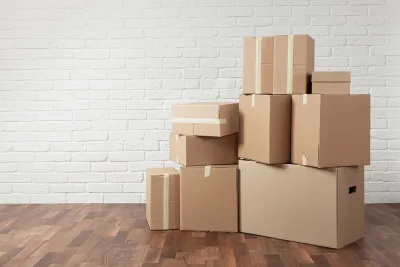
Can you order custom corrugated boxes in an exact size you need
Ninety percent of what ships in a box that’s the wrong size costs somebody real money — usually the seller, sometimes both sides of the transaction. Twenty-plus years in corrugated, and that number hasn’t budged. So here’s the question worth asking before you order another pallet of one-size-fits-all cartons: can you actually get custom corrugated boxes cut to the exact dimensions your product needs, without jumping through a manufacturer’s minimum-order hoops?
The honest answer is yes — it’s a lot more accessible than it used to be. Ten years ago, custom sizing meant a factory minimum in the tens of thousands and a six-week wait. That’s changed. Small e-commerce sellers now order custom shipping boxes with logo printing, exact-fit dimensions, and reasonable turnaround, right alongside the big wholesale accounts. But knowing that custom is possible is different from knowing how to spec it, price it, and avoid the mistakes that eat your margin before the first box ever ships.
Why Standard Box Sizes Rarely Fit What You’re Actually Shipping
A seller ships ceramic mugs in a stock 10x10x10 box padded with three fistfuls of paper, and the carrier still charges for a box twice that size. Sound familiar? That gap between what you’re shipping and what the box measures is where money quietly disappears every single week. Most warehouses stock maybe 15 to 20 sizes. Your product doesn’t care about round numbers — and neither does your carrier’s scale.
The Dimensional Weight Problem Nobody Explains Upfront
Carriers bill by length times width times height divided by a standard factor, not by actual weight. Ship a 2-lb item in an oversized box and you might get charged for 9 or 10 lbs. That’s not a rounding error — that’s real money leaving your margin on every order, all month, every month.
When a Stock Cube or Mailer Just Won’t Cut It
Cube boxes work fine for symmetrical products. But irregular items — a coiled cable, a framed print, a bundle of three products shipped together — need something built to their actual footprint. This is exactly why Custom corrugated boxes exist: to close that gap between generic cardboard — the product you’re actually sending out the door.
How Custom Corrugated Sizing Actually Works
Standard box sizes don’t fit every product — that’s just a fact. A supplier working from a corrugated sheet plant can cut a box to almost any dimension, because the board starts flat and gets scored, slotted, and glued to spec. That means a 5x5x5 cube isn’t the only small option available; a 7x4x3 or 13x9x2 works just as easily once the die line is set.
Single-Wall vs Double-Wall: Picking the Right Board for a Custom Cut
Single-wall board handles most retail and e-commerce shipping — think books, apparel, small electronics. Double-wall makes sense for heavier or bulkier goods, oversized shipping jobs, or anything traveling long distance where the box gets tossed around. The wall type doesn’t change how precisely the box can be cut — it changes how much abuse the finished box survives.
From Spec Sheet to Finished Box: What the Process Looks Like
The process usually runs like this: submit exact length, width, and height; approve a die line proof; then production runs the cut. Add a logo or design, and there’s a print proof step before anything hits the line.
Minimums, Turnaround, and What “No Minimum” Really Means
“No minimum” rarely means one box — it usually means 25 to 50 units instead of a full pallet, with turnaround running one to three weeks depending on print complexity.
Custom Printed Boxes vs Plain Corrugated: What Small Businesses Should Weigh
Does your box need a logo to do its job? For a lot of small sellers, the honest answer is no — not yet. Plain kraft corrugated boxes ship product just fine, and skipping print setup keeps per-unit cost lower while you’re still testing sizes and demand. Custom printed shipping boxes make sense once you’ve settled on a size that isn’t going to change every month.
Logo Placement, Ink Limits, and Kraft vs White Board
Printing works differently depending on the board. Kraft board takes one or two ink colors well but won’t show fine detail — it’s the rustic, recognizable look. White board handles full-color logos and photo-quality graphics, closer to retail display packaging. Most printers limit you to one or two print locations (typically the top and one side) unless you’re paying for a more elaborate setup. Keep logo art simple: thin lines and small text tend to blur on corrugated’s textured surface.
When Custom Printing Actually Pays Off
Printing earns its cost once volume climbs — usually somewhere past a few hundred boxes a month, when the per-unit print charge shrinks — the branding value (repeat customers, social shares, fewer “is this real?” questions) outweighs plain packaging. Below that volume, a printed shipping label or tape on a plain box does almost the same job for a fraction of the cost.
Sourcing Custom Corrugated Boxes for Shipping and Retail Display
Here’s a number that surprises most first-time buyers: some suppliers will print as few as 50 units, while others won’t talk to you below 1,000. That gap is huge, and it’s the first thing to sort out before you shop. Corrugated is not plastic and it’s not rigid chipboard — it’s fluted board, made to flex slightly and absorb shock, which is exactly why it dominates shipping and retail display alike.
Wholesale Ordering for Growing E-Commerce Brands
Once a brand clears roughly 500 orders a month, wholesale pricing on custom corrugated shipping boxes usually beats buying plain stock — adding a logo sticker. Ask suppliers for tiered pricing at 500, 1,000, and 5,000 units — the price-per-box drop between those tiers is often steeper than people expect.
Large or Oversized Custom Shipping Boxes for Bulky Products
Furniture, appliances, and other oversized products need double-wall or triple-wall board, not standard single-wall stock. Getting a custom size here matters more than logo placement — a box built for the product means less void fill and fewer dimensional weight surprises.
Local Options vs Online Suppliers: What’s Actually Faster
Local print shops can turn small runs around fast but rarely offer real size customization. Online suppliers, by contrast, run size-specific tooling and often ship nationwide in days — not weeks.
Here’s the honest bottom line after twenty-some years watching businesses wrestle with this decision: sizing is where the money gets made or lost, not the printing. A box that’s an inch too big on every side isn’t a small mistake — it’s a recurring dimensional weight penalty on every single shipment you send out for as long as you use it. Get the cut right first. Worry about kraft versus white, single-wall versus double-wall, logos and ink colors second.
Custom corrugated boxes aren’t just for brands shipping ten thousand units a month, either. Case-quantity minimums and faster turnaround windows have made exact sizing realistic for sellers moving a few hundred orders. That shift matters — it means the fit-and-finish advantage once reserved for big operations is now available to anyone tired of stuffing air into oversized packaging.
So measure your actual product, not your guess. Pull three real dimensions, factor in your protective wrap, and take that spec sheet to a supplier who’ll run a sample before committing you to a full pallet. That’s the move. Everything else is just details.