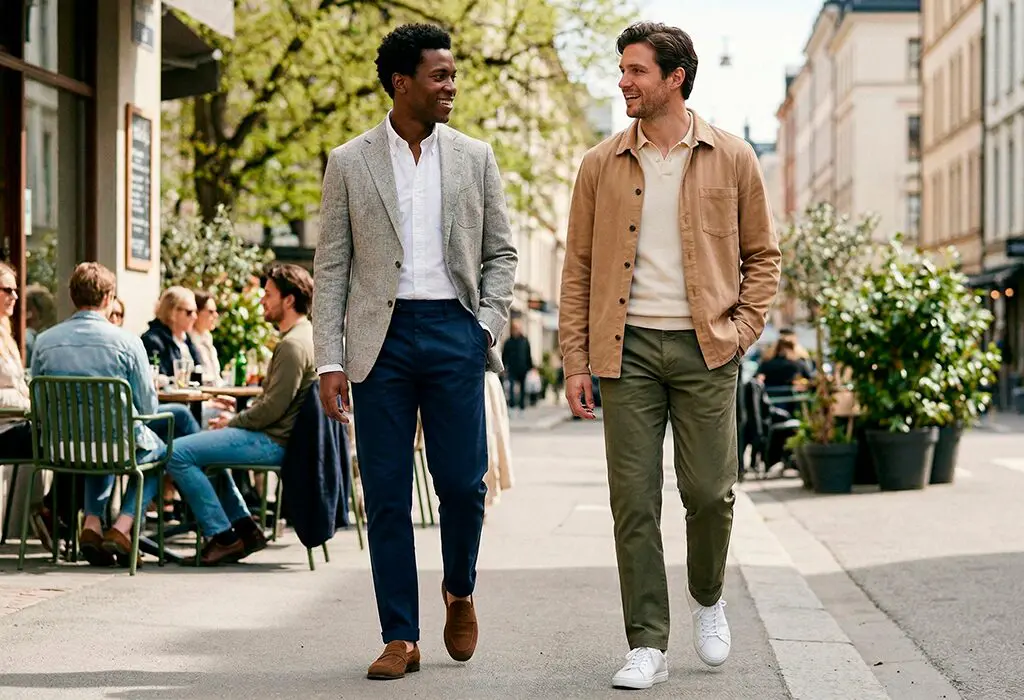
Finding good shirts outfit ideas for men shouldn’t require a stylist or a Pinterest binge that leaves you more confused than when you started. Men’s shirts, whether button-ups, camp collars or graphic tees worn like a shirt layer, are one of the most flexible pieces in a casual wardrobe. Get the fit and pairing right and a plain shirt can carry an entire outfit. Get it wrong and even an expensive one looks like an afterthought. This guide breaks down real, wearable shirts outfit ideas for men that work across seasons, body types and occasions, with a few pointers on where brands like dennis rodman fit into a streetwear-leaning rotation.
Key takeaways
- Fit and proportion matter more than colour when building shirt outfits
- Fabric weight determines whether a shirt should be tucked or left open
- Limit layering to two or three pieces to avoid a busy look
- Body type should guide silhouette choices, not just personal preference
- Seasonal fabric swaps keep a shirt rotation versatile year-round
The goal here isn’t to hand you a rigid uniform. It’s to give you a framework so you can build your own shirt outfits on the fly, using pieces you already own.
Why Shirts Outfit Ideas for Men Fail More Often Than They Should
Most shirt outfits go wrong for one of three reasons: the fit is off, the proportions clash, or the shirt is doing a job it wasn’t designed for. A boxy graphic tee tucked into slim trousers reads differently than the same tee left loose over relaxed denim. Neither is wrong, but they’re not interchangeable.
Before you even think about styling, know what silhouette you’re working with. Oversized shirts need room elsewhere to avoid looking sloppy. Fitted shirts need cleaner lines everywhere else so the outfit doesn’t feel busy. This single rule solves more outfit problems than any specific pairing advice, and it’s the foundation every good shirt outfit should be built on.
The Core Shirt Outfit Ideas Every Man Should Know
These aren’t trend-dependent. They work now and they’ll work in five years.
- Graphic tee, open shirt, straight jeans: layer a lightweight button-up open over a plain or graphic tee, keep the jeans straight rather than skinny, and finish with low-profile sneakers.
- Camp collar shirt, shorts, low sneakers: a warm-weather staple. Let the shirt sit untucked and slightly loose for the right proportion.
- Oxford shirt, chinos, minimal jacket: the closest thing to smart-casual in a streetwear wardrobe. Works for dinners, meetings that aren’t quite formal, and travel days.
- Flannel shirt tied at the waist over a tee: adds texture and a splash of colour without committing to a full flannel outfit.
Each of these shirts outfit ideas for men relies on contrast: loose with fitted, textured with plain, casual with slightly elevated. That contrast is what makes an outfit look considered instead of accidental, and it’s a detail a lot of guides on shirts outfit ideas for men skip entirely.
Building Outfits Around Fabric, Not Just Colour
Colour gets all the attention, but fabric does more of the actual styling work. A heavyweight cotton shirt drapes and holds shape, which makes it forgiving for looser fits. A lightweight poplin or rayon shirt moves more and suits a tucked-in, cleaner look.
Quick fabric guide
| Fabric | Best worn | Pairs well with |
| Heavyweight cotton | Untucked, layered open | Straight jeans, cargo trousers |
| Poplin or lightweight cotton | Tucked or half-tucked | Chinos, tailored shorts |
| Flannel | Layered over tees | Denim, work boots |
| Jersey (graphic tee as shirt layer) | Loose, single layer | Joggers, relaxed denim |
Knowing how a fabric behaves before you buy saves you from outfit ideas that look great on a hanger but fall flat once worn. Weight and drape matter more than pattern when you’re trying to make a shirt work with the rest of a casual wardrobe.
Layering Shirts Without Overdoing It
Layering is where a lot of men either nail an outfit or overcomplicate it. The safest rule: two layers, three at most, and only one of them should have any real pattern or graphic detail.
A plain tee under an open shirt is layer one and two. Add a light jacket and you’re at three, which is plenty for most casual settings. Push past that and the outfit starts competing with itself. A shirt from a graphic-driven label such as dennis rodman shirt options works well as the standout piece precisely because everything else around it should stay quiet. For a similar reason, a dennis rodman graphic tee can anchor a two-piece outfit without needing extra layers competing for attention.
Shirts Outfit Ideas for Men Based on Body Type
Fit advice tends to get vague, so here’s something more concrete.
- Broader shoulders: avoid heavily boxy shirts up top; a slightly tapered fit balances proportions without feeling restrictive.
- Slimmer build: oversized or relaxed shirts add visual width without needing to size up in a way that looks borrowed.
- Taller frames: horizontal detail, like a chest pocket or contrast collar, breaks up length nicely.
- Shorter frames: keep hems around hip level rather than mid-thigh; anything longer shortens the leg line visually.
None of these are rules carved in stone, but they explain why the same shirt outfit idea looks different from one man to the next. Body type is one of the most overlooked variables in shirts outfit ideas for men, and it’s worth thirty seconds of honest assessment before buying a new fit.
Graphic Tees as Shirt Alternatives
Not every casual outfit needs a woven shirt at all. A heavier graphic tee, worn as the outer layer over a long-sleeve base, can do the same visual job as a button-up while feeling more relaxed. This works particularly well in colder months when you want warmth without adding bulk.
Pair a graphic tee with straight-leg trousers and a simple jacket, and you get a look that reads as considered rather than thrown together. It’s one of the more underrated ways to build a casual outfit because it swaps out a traditional collar for something with more graphic presence, which suits a streetwear-leaning wardrobe.
Seasonal Adjustments Worth Knowing
Shirt outfits shift with weather more than most people plan for. In warmer months, lighter fabrics and shorter sleeves keep things breathable, while camp collars and short-sleeve button-ups do well left fully open over a tee. In colder months, flannel and heavier cotton shirts work better as a mid-layer under a jacket rather than as the outermost piece.
A simple seasonal checklist helps: swap fabric weight before you swap silhouette, and only change one variable at a time so you can tell what’s actually working. This approach keeps a wardrobe of shirts outfit ideas for men flexible without needing an entirely new set of clothes every few months.
Frequently Asked Questions
What is the easiest shirt outfit idea for beginners?
A plain tee under an open button-up shirt with straight jeans is the most forgiving combination, since it relies on contrast rather than exact colour matching.
Should a casual shirt be tucked in or left out?
Lightweight fabrics like poplin generally look cleaner tucked in, while heavier cotton or flannel shirts tend to suit an untucked or half-tucked look better.
How many layers is too many for a shirt outfit?
Three layers is usually the practical limit for casual wear; beyond that, the outfit starts to look busy rather than intentional.
Can a graphic tee replace a button-up shirt?
Yes, a heavier graphic tee worn as the outer layer can serve the same styling purpose as a woven shirt, especially in a streetwear context.
What shirt fabric works best for warm weather?
Lightweight poplin or cotton breathes better and drapes more easily, making it a better warm-weather choice than flannel or heavyweight cotton.
Final Thoughts on Building a Shirt Rotation
A strong rotation of shirts outfit ideas for men doesn’t need dozens of pieces. A handful of well-fitted shirts in different weights, one or two graphic pieces, and a clear sense of proportion will cover most casual occasions. Build from fit first, fabric second, and colour last, and the outfits tend to take care of themselves.